
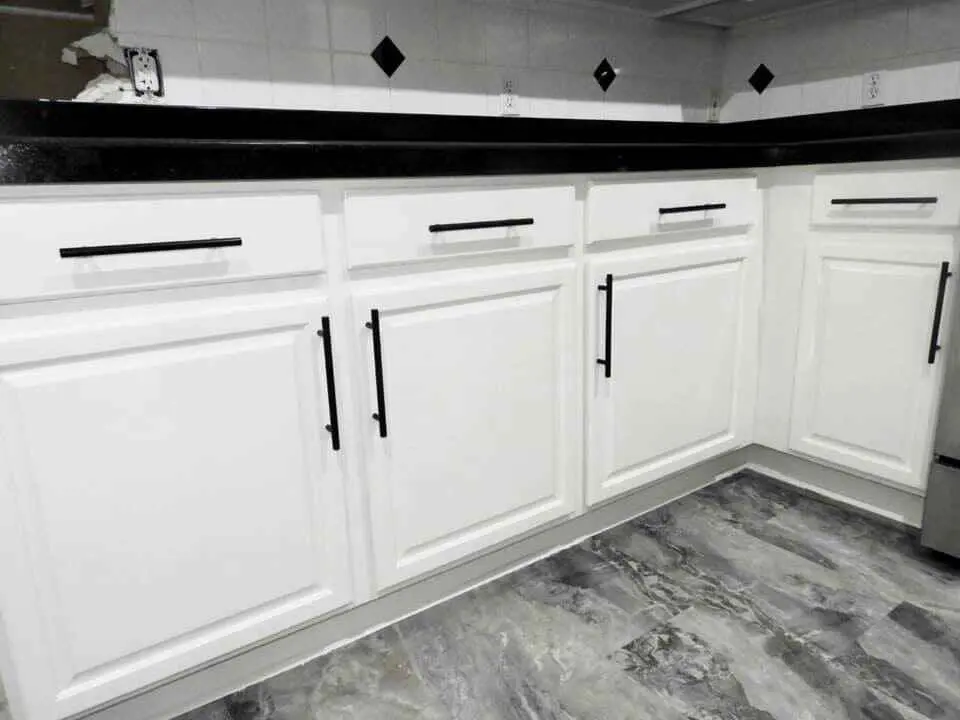
Start with the practical answer
Refinish or paint when the boxes, layout and door style are worth keeping. Reface when the boxes and layout are good but the door profile needs to change. Replace only the doors when new fronts are the defined need and the existing frames can remain or be handled separately. Install new cabinets when the layout, dimensions, storage or box condition must change.
A photograph can show the look you want, but the condition of your cabinets and the result you need should determine which option is worth the investment.
How the five common terms differ
| Route | What stays | What changes | Best fit |
|---|---|---|---|
| Cabinet painting | Boxes, layout and existing fronts | Visible coating on listed surfaces | Good cabinets with an acceptable door style |
| Cabinet refinishing | Boxes, layout and fronts | Preparation and a new visible finish system | Sound cabinetry needing a durable finish change |
| Cabinet refacing | Boxes and layout | New doors/drawer fronts plus coordinated visible box surfaces | Good structure with an unwanted door profile |
| Door replacement | Boxes and generally the frames | Selected doors and drawer fronts | Focused front replacement or production order |
| New cabinets | Only room conditions and chosen elements | Boxes, fronts, storage and potentially layout | Poor structure, poor layout or major storage change |
When refinishing is the better value
Refinishing preserves the greatest amount of the existing kitchen. It is compelling when the cabinet boxes are secure, the layout supports the household and the doors still have a profile the homehomeowner likes. The project can redirect budget toward counters, backsplash, lighting or other work.
It is not a structural cure. Water-swollen material, failing joints, unusable storage and a fundamentally poor layout should not be hidden beneath a new coating.
- Ask which visible surfaces are included
- Ask how doors and drawer fronts are prepared
- Identify prior paint or coating failures
- List trim, interiors, hardware and repairs separately
When refacing earns the extra scope
Refacing changes the architecture of the cabinet face by installing new doors and drawer fronts. It is the right middle route when arched, ornate or damaged fronts are the real reason the kitchen feels dated, while the cabinet boxes and locations remain worth preserving.
Your estimate should explain how face frames, ends, toe kicks, crown and fillers will coordinate. “Refacing” should not be used as a vague label that leaves the box treatment unexplained.
When replacement doors are a focused solution
A made-to-measure door order can solve damaged fronts, discontinued sizes or a style update without becoming a whole-kitchen contract. Measurements, overlay, hinge boring, paired doors and drawer-front heights must be documented.
Door pricing depends on the complete approved order: sizes, quantities, profile, material, finish, machining and delivery. Ask for one written total that clearly separates production from local measuring, frame finishing, hardware and installation.
When new cabinets are the honest answer
New cabinetry becomes the better investment when the existing boxes are weak, appliance positions need to change, storage is fundamentally poor or standard cabinet dimensions cannot solve the room. It creates the most design freedom and the largest connected scope.
Before committing, compare the cost of preserving old boxes plus extensive modifications against a new package designed once around the actual room.
A quote-comparison checklist
- Exact components included and excluded
- Condition repairs and preparation
- Door profile, material, color and sheen
- Hinges, pulls, slides and accessories
- Countertop, backsplash and trade coordination
- Schedule, payment and change process
- Written limited warranty and exclusions